
Mit der eigenen Wut durch GFK arbeiten
Bevor du deine Wut gut aussprechen kannst, musst du wissen, was sie sagt. Dieser Teil der GFK passiert in deinem eigenen Kopf, bevor jemand anderes beteiligt ist.
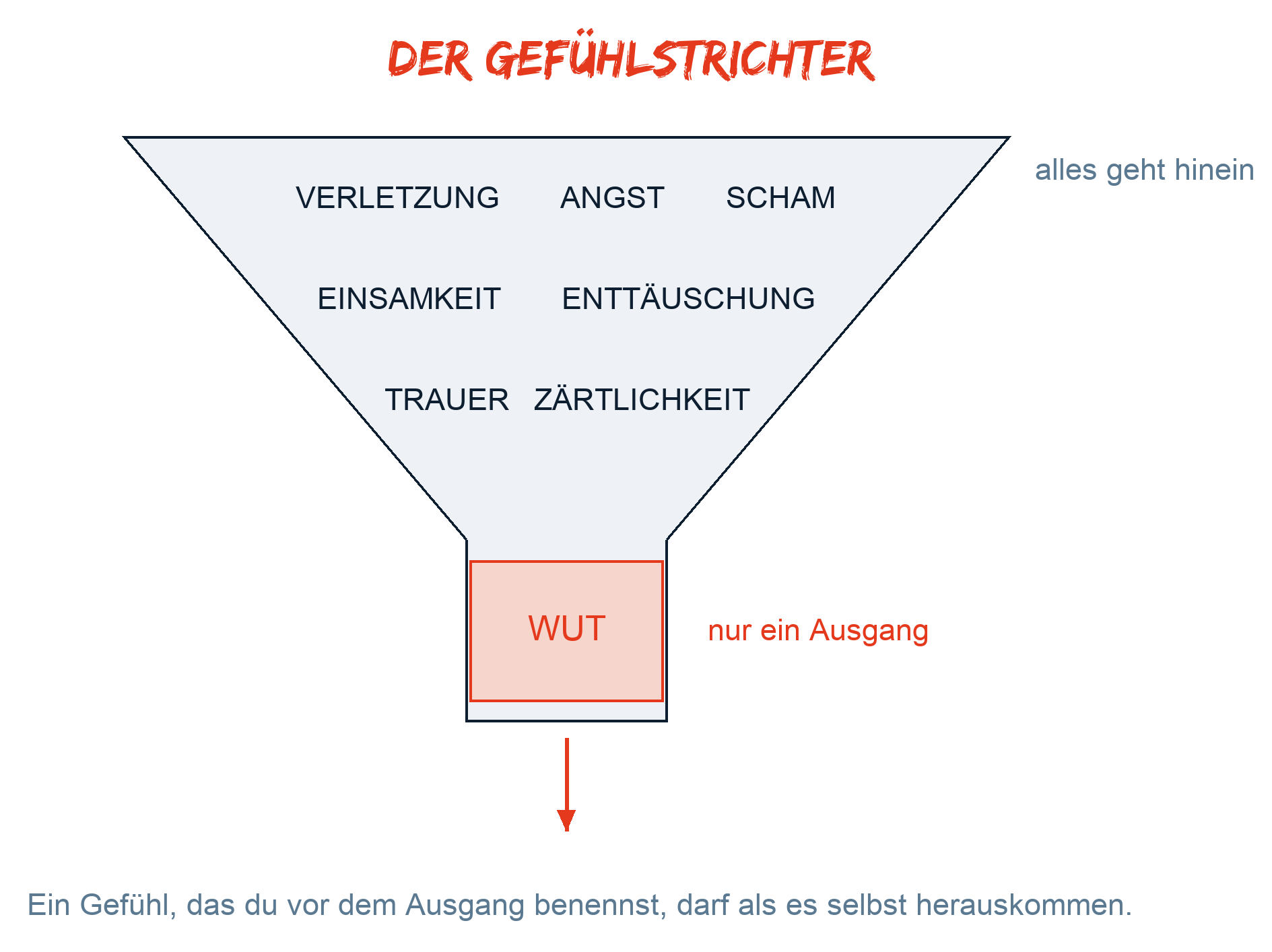
Das Bild im Buch dafür ist der Gefühls-Trichter. Oben hinein gehen Trauer, Angst, Scham, Einsamkeit und Enttäuschung. Wenn du gelernt hast, dass die meisten davon verboten sind, gibt es unten nur einen Ausguss, und alles kommt als Wut heraus. Jedes Gefühl, das du benennen kannst, bevor es den Ausguss erreicht, macht den Trichter weiter.
Die meisten Menschen können sagen, was sie wollen, und nicht benennen, was sie brauchen. Du hast viele genaue Wörter für das, was andere falsch machen, und sehr wenige für das, was dir fehlt. Der Bedürfnis-Finder schließt diese Lücke:\
- Schreib deine Position auf, das konkrete Ding, das du willst.\
- Frag dreimal warum, und lass dich von jedem Warum eine Ebene tiefer bringen.\
- Benenne das Bedürfnis in universellen Worten: Erholung, Respekt, Verbindung, Autonomie, wichtig sein.\
- Mach daraus eine Bitte, an den anderen oder an dich selbst.
Mach unterwegs den Schein-Gefühl-Test. „Ich fühle mich abgewimmelt“ ist ein Urteil über jemand anderen. „Ich fühle mich beschämt und klein“ passiert in dir, und es zeigt viel klarer auf das Bedürfnis.
Das Gefühl zu benennen hilft auch im Moment selbst. In Matthew Liebermans Hirnscan-Studie dämpfte das Benennen eines Gefühls die Aktivität der Amygdala, des Alarmzentrums im Gehirn. Ein stilles „Ich bin wütend, das ist die Welle“ verschafft dir ein wenig Luft.
Im echten Leben: Lukas ist wütend nach einem Meeting, in dem seine Idee einfach abgewinkt wurde. Seine Position: „Diesem Team präsentiere ich nie wieder etwas.“ Warum? Weil es peinlich war. Warum ist das wichtig? Weil die Arbeit gut war und niemand sie angeschaut hat. Und warum ist das wichtig? Weil er braucht, dass sein Beitrag zählt. Das Bedürfnis ist Anerkennung. Seine Bitte an sich selbst: seinen Chef um zehn Minuten Rückmeldung zu bitten, bevor er irgendetwas entscheidet.
🎯 Kernbotschaft: Deine Wut zeigt auf ein Bedürfnis. Finde es mit drei Warums, und du hast etwas, worum du bitten kannst, statt etwas, worüber du nur schreien kannst.
Probier es aus
Nimm eine Wut, die du gerade mit dir herumträgst. Schreib die Position auf, frag dreimal warum und notiere jede Antwort. Benenne das Bedürfnis in ein, zwei Worten und schreib eine realistische Bitte auf, die es erfüllen könnte.
📱 In der App: Werkzeuge → Emotionaler Check-In
📖 Weiterlesen: Das Wut-Signal, Kapitel 15