
Wutmuster und Wurzelarbeit
Wenn derselbe Streit mit verschiedenen Menschen immer wieder passiert, wächst er meist aus einer Wurzel. Solange du sie nicht benennst, zupfst du an Blättern.
Lies dein Wut-Protokoll quer durch die Episoden statt von oben nach unten. Ignoriere die Menschen und die Auslöser, und such das Thema. Bei den meisten Menschen ballt sich die Wut um ein oder zwei Themen: Respekt, Kontrolle oder Gehörtwerden. Hast du deins gefunden, fügen sich oft ein Dutzend zusammenhanglose Ausbrüche zu einem einzigen Streit.
Verfolge es nach Hause: Das ist der Eisberg aus Kapitel 3 des Buchs, über dein ganzes Leben hinweg betrachtet. Wann wurde es zum ersten Mal zu dem, was dich zuverlässig zünden konnte: nicht respektiert, kontrolliert oder übersehen zu werden? Meist ist es alt. Stell auch die Frage nach dem zweiten Erbe: Was hast du geschworen, nie zu werden, und was zahlst du zu viel, um diesen Schwur zu halten?
Manchmal ist Wut das sichtbare Symptom von etwas, das einen eigenen Namen und eine eigene Behandlung hat. Das Buch nennt acht Türen: intermittierende explosible Störung, ADHS, PMDS, Wut nach der Geburt, Perimenopause, Depression, bipolare Störung und Trauma. Nichts davon ist eine Diagnose, aber wenn zwei oder mehr davon anklingen, geh zuerst zu deiner Hausärztin oder deinem Hausarzt.
Ein autistischer Meltdown ist noch etwas anderes: Überlastung, auf niemanden gerichtet, und die Gesprächswerkzeuge dieses Kurses würden ihm wahrscheinlich noch Last aufladen. Was hilft, ist weniger Zufuhr.
Wirkt das alles? Kognitiv-verhaltenstherapeutische Wut-Behandlungen zeigen über viele kontrollierte Studien mittlere bis große Effekte. In der KVT insgesamt sagt das Üben im echten Leben zwischen den Terminen den Erfolg besser voraus als das Format.
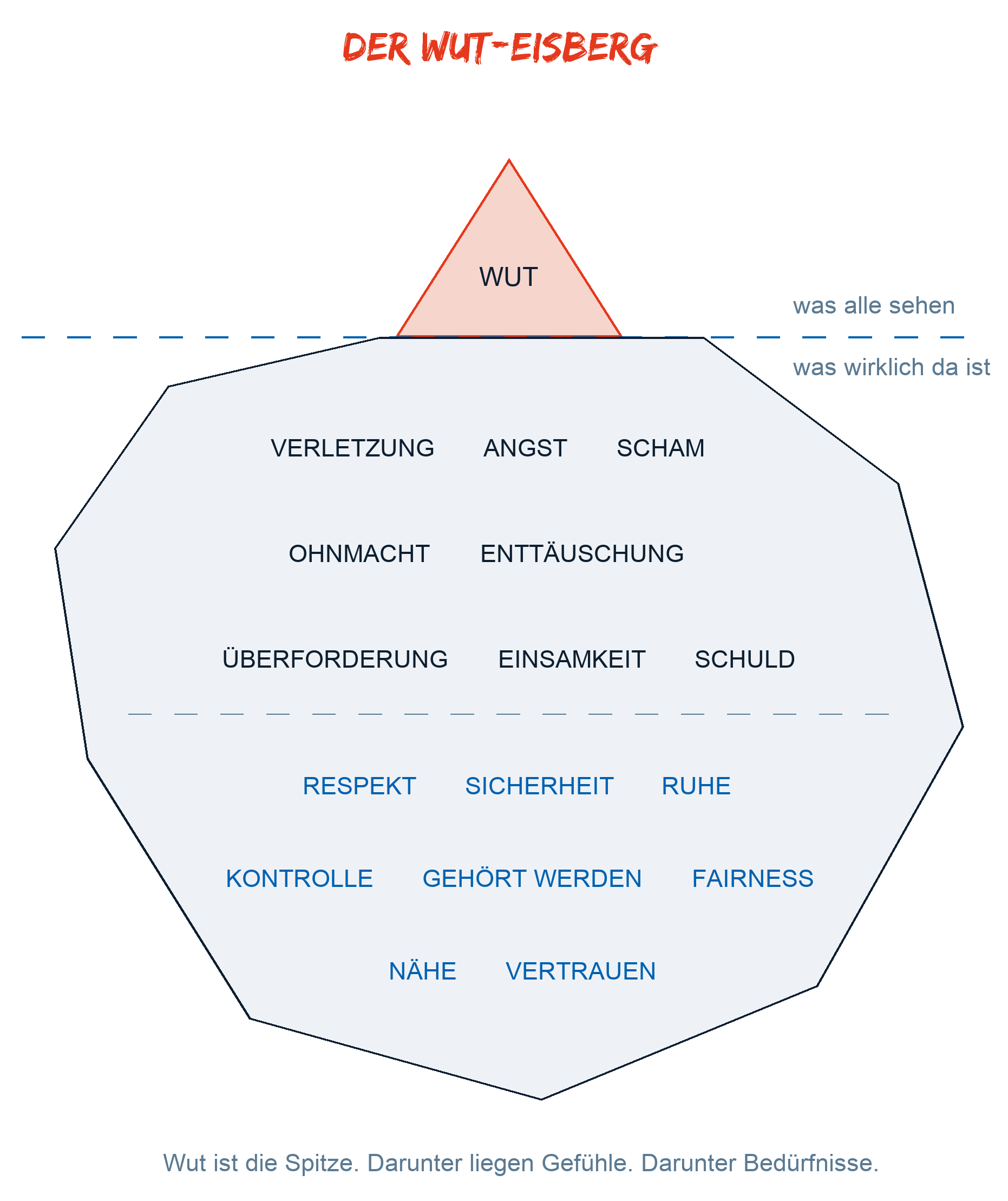
Im echten Leben: Viktoria liest quer durch drei Monate ihres Protokolls. Die Kollegin, die ihr ins Wort fällt, Lukas’ Entscheidungen ohne Rückfrage und die Freundin, die vierzig Minuten zu spät kommt: Darunter steht ein einziger Satz. „Ich werde nicht gefragt.“ Kontrolle. Sie verfolgt es zurück bis in eine Kindheit, in der ihr Entscheidungen erst hinterher mitgeteilt wurden. Jetzt arbeitet sie an der Wurzel und bittet mit einem sauberen Satz direkt um Mitsprache, statt drei Menschen einzeln zu bekämpfen.
🎯 Kernbotschaft: Wiederkehrende Streits teilen eine Wurzel. Benenne das Thema, verfolge es nach Hause, und sei ehrlich, ob es diesen Kurs braucht oder eine Fachperson.
Probier es aus
Leg dir deine letzten zwölf Wut-Episoden hin, aus dem Protokoll oder aus dem Gedächtnis. Schreib das gemeinsame Thema in ein, zwei Worten auf, und wo es deiner Meinung nach angefangen hat. Dann lies die Liste der acht Türen langsam und kreise ein, was anklingt.
📱 In der App: Fortschritt & Tagebuch
📖 Weiterlesen: Das Wut-Signal, Kapitel 30