
Anger Patterns and Root Work
When the same fight keeps happening with different people, it usually grows from one root. Until you name it, you are pulling at leaves.
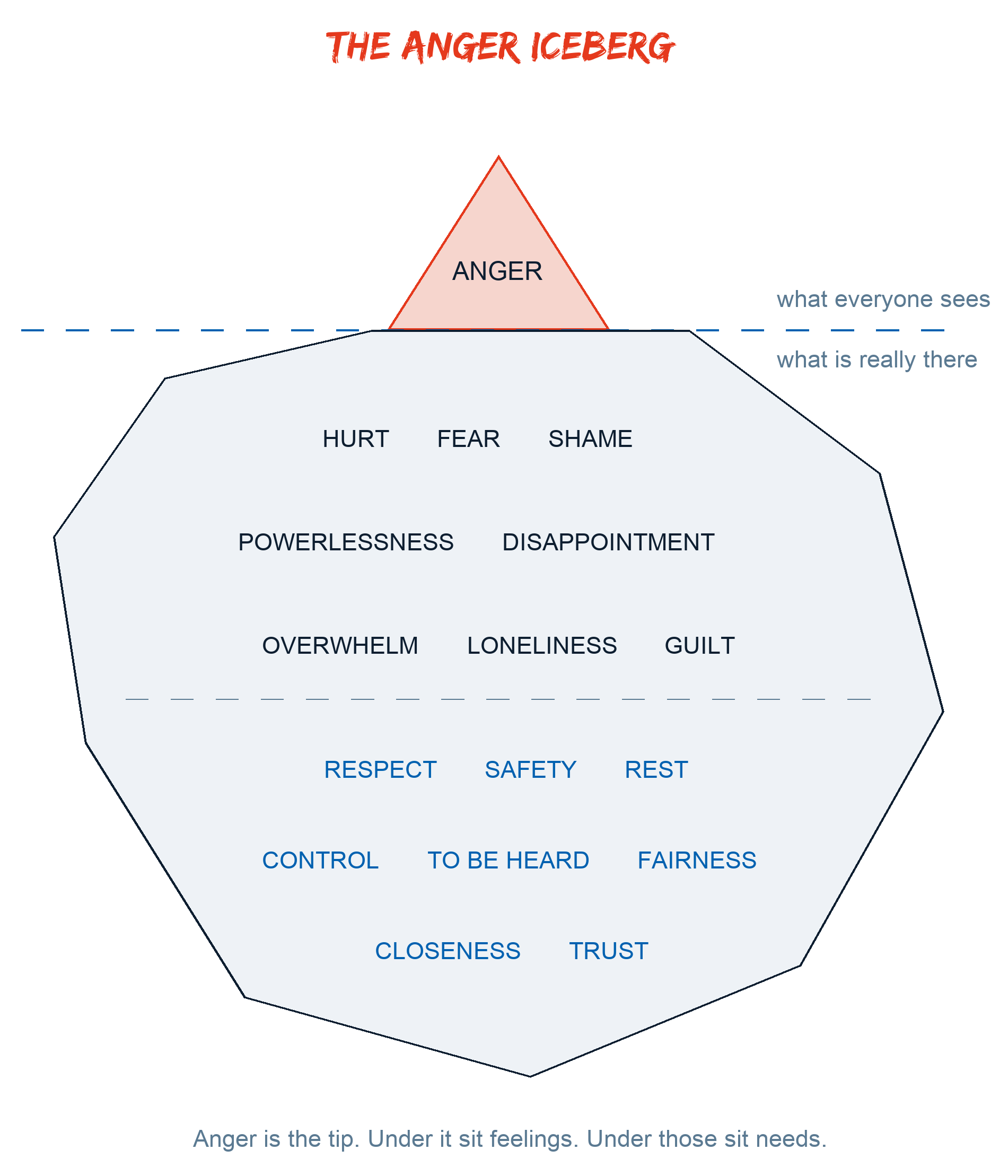
Read your anger log across your episodes instead of down. Ignore the people and the triggers, and look for the theme. Most people's anger clusters around one or two: respect, control, or being heard. Once you find yours, a dozen unrelated blowups often line up as one fight.
Trace it home: this is the iceberg from the book's chapter 3, seen across your whole life. When did not being respected, or being controlled, or going unseen first become the thing that could reliably set you off? Usually it is old. Ask the second inheritance question too: what did you swear you would never be, and what are you over-paying to keep that vow?
Sometimes anger is the visible symptom of something with its own name and its own treatment. The book names eight doors: intermittent explosive disorder, ADHD, PMDD, postpartum rage, perimenopause, depression, bipolar disorder and trauma. None of this is a diagnosis, but if two or more ring true, start with your doctor.
An autistic meltdown is something else again: overwhelm, aimed at nobody, and the talking tools in this course would likely add to the load. What helps is less input.
Does any of this work? Cognitive-behavioural anger treatments show moderate-to-large effects across many controlled studies. In CBT generally, what predicts success is practising in real life between appointments, more than which format you use.
In real life: Viktoria reads across three months of her log. The colleague who talks over her, the decisions Lukas makes without asking, the friend who turns up forty minutes late: underneath, one sentence. "I don't get a say." Control. She traces it to a childhood in which decisions were announced to her afterwards. Now she works on the root and asks directly for a say, with a clean sentence, instead of fighting three people separately.
🎯 Takeaway: Recurring fights share a root. Name the theme, trace it home, and be honest about whether it needs this course or a professional.
Try this
Lay out your last dozen anger episodes, from your log or from memory. Write the theme they share in one or two words, and where you think it started. Then read the list of eight doors slowly and circle anything that rings true.
📱 In the app: Progress & Journal
📖 Go deeper: The Anger Signal, Chapter 30