
Empathy for the Angry Other
When someone is furious at you, your alarm answers theirs within seconds. The skill is staying calm enough to hear the need under their attack.
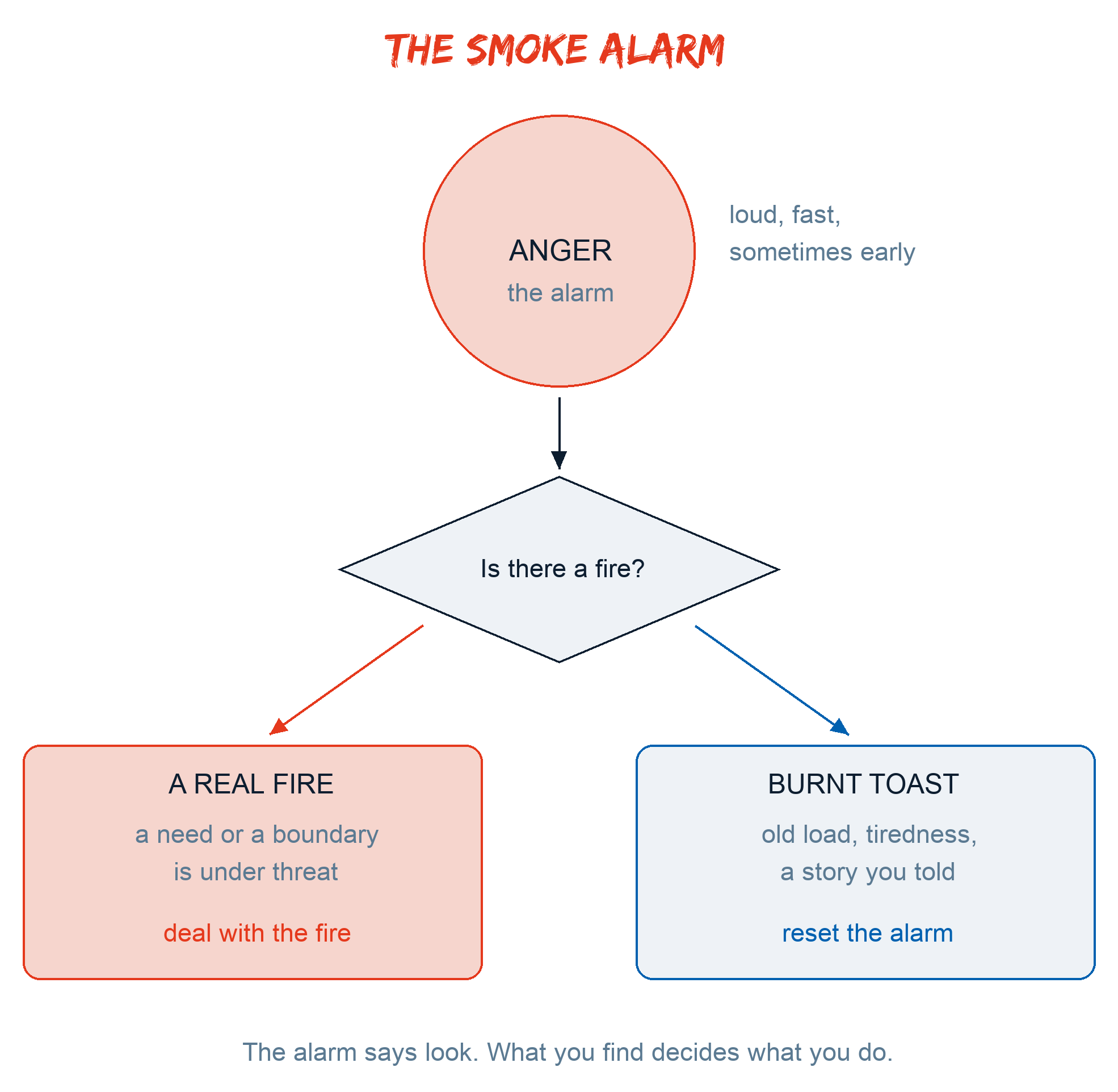
Their anger is a smoke alarm too: it signals their unmet need and passes no verdict on your worth. Under the shouting there is usually fear, hurt or powerlessness, the same material that sits under yours. Once you can hear that need, you stop taking the surface personally, and your own alarm quiets.
Before you answer, drop the enemy image. Mid-conflict your mind draws a cartoon of the other person: the bully, the manipulator. The drawing is finished before you speak, and you end up speaking to the drawing. They hear it in your tone and act more like the villain, which confirms the cartoon.
The angry-other protocol:\
- Regulate yourself first. Name it silently and take one long exhale.\
- Drop the enemy image. There is a scared or hurting person under this.\
- Listen to understand. Reflect the need you hear: "It sounds like you felt completely on your own with this."\
- Mine the true 10 percent. Agree out loud with the part that is true.\
- Hold the door, with a lock. Name the line calmly, and step away if it is crossed.
Agreeing with the true 10 percent takes the wind out of the other 90, and it is honest. You can do all of this well and they may still leave angry, and you will still have done your half.
If you are afraid of them, or there has been violence or the threat of it, stop here. That is a safety problem, and no communication tool fits it. Help for your country is listed at findahelpline.com.
In real life: Lukas is furious that Viktoria has worked late again. Her instinct is to list the deadlines, so she takes one long exhale first and drops the picture of him as the man who never understands her job. "It sounds like you've felt alone with the kids all week," she says. She mines the true part too: "You're right that I've been home late four nights." He exhales. "Yes. That's right." The deadlines still exist, and now they can talk about them.
🎯 Takeaway: Their anger is an alarm about their need. Regulate first, drop the cartoon, reflect the need, agree with what is true, and keep the lock on the door.
Try this
Think of someone who is often angry with you. Write the cartoon you usually draw of them. Then write the need their anger might be expressing, and one true sentence from their usual complaint that you could agree with out loud.
📖 Go deeper: The Anger Signal, Chapter 17