
Repair After Rupture
Even with every tool, you will sometimes blow up. What you do in the hour afterwards decides most of the damage.
Rupture is inevitable, and repair is the variable. Gottman found that partners in strong marriages also misread and hurt each other constantly, and that they repair quickly and often. Ed Tronick filmed mothers with their babies and found that even attentive pairs are in sync only a fraction of the time. The endless small repairs are what hold them together.
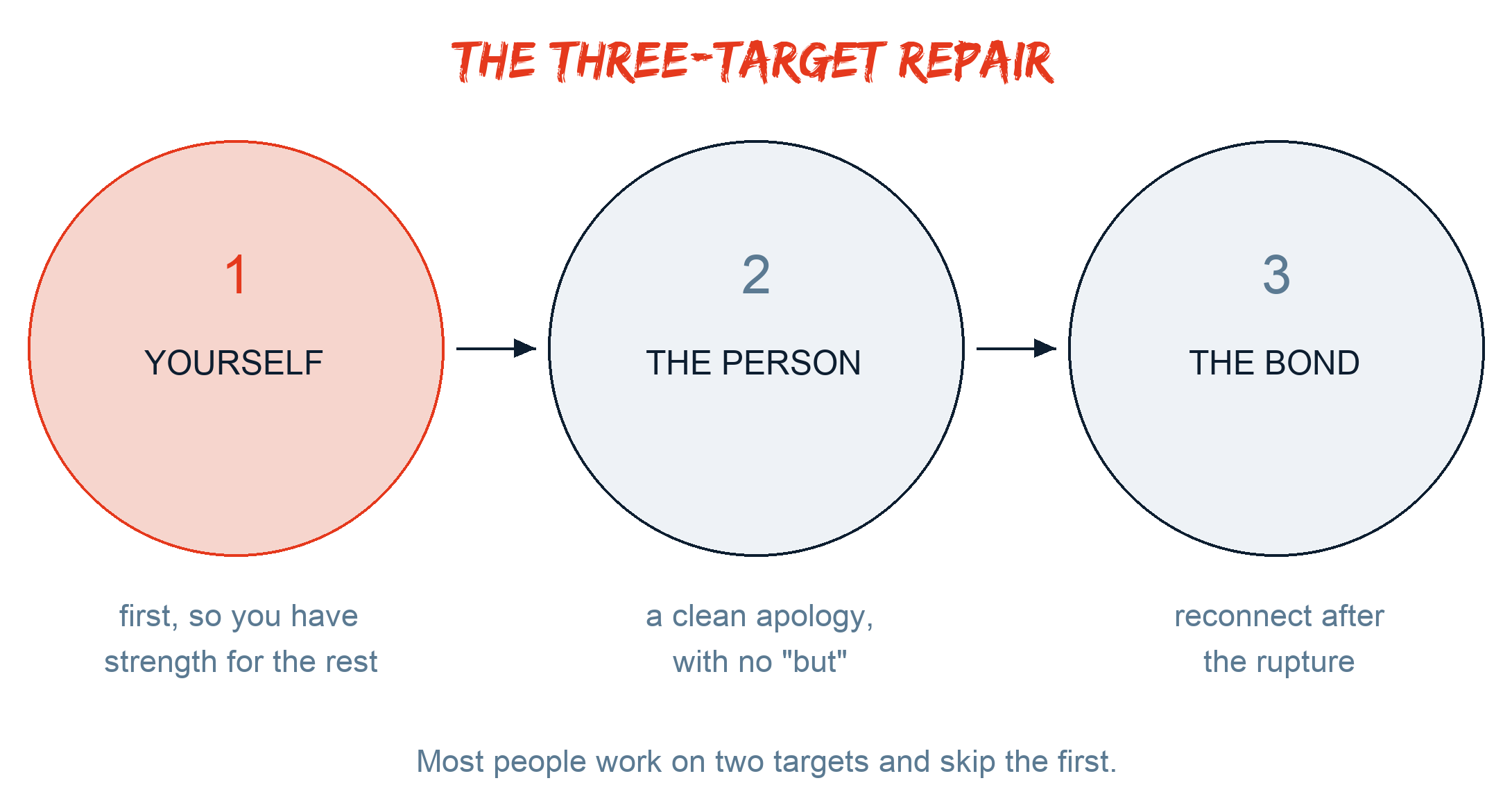
Repair has three targets, and most people skip the first:\
- Yourself. Catch the shame spiral before it drains you. "I did a harmful thing. That's guilt, and it's fair. I'm still worth the effort of trying again."\
- The person. Name what you did, specifically, with no "but". Say briefly what you will do differently.\
- The relationship. Reconnect through something ordinary: a hug, a shared task, the return to normal.
Self-repair comes first for a mechanical reason, and June Tangney's research on guilt and shame shows it. Guilt is about what you did, and guilt-prone people repair. Shame is about what you are, and shame-prone people get defensive, push the blame back outward and report more anger. Kristin Neff's work on self-compassion points the same way: steadiness toward yourself keeps you able to do better next time.
A fake apology gives itself away with one word: but. "I'm sorry I yelled, but you weren't listening" deletes everything before the but. A real apology names what you did and says it wasn't their fault, with no defence attached.
In real life: Lukas yells at his son over spilled juice and sees him flinch. That night the shame arrives: what kind of father does that. He catches it: "I scared my kid. That's on me, and hating myself won't help him." He goes to his son's room and says: "I yelled at you and I scared you. That wasn't okay, and it wasn't your fault. I'm working on catching myself sooner." No but. A hug, a story, and the ordinary evening comes back.
🎯 Takeaway: Ruptures happen in every close relationship. Repair yourself, then the person, then the relationship, and leave the "but" out of the apology.
Try this
Think of a rupture you never repaired, and write the self-repair sentence first. Then write the apology: what you did, specifically, with no "but", and the one thing you will do differently. Last, write down an ordinary thing you can do together to reconnect.
📱 In the app: Progress & Journal
📖 Go deeper: The Anger Signal, Chapter 27