
What Are Triggers?
The same small thing can roll off you one day and set you off the next. What changed is the load you were already carrying.
A trigger is the spark: the specific event just before the anger, the one everyone in the room can see. The milk on the counter. The tone. The traffic. The cause is everything that had already made you flammable by the time the spark landed.
A spark on wet wood does nothing. The same spark on dry tinder takes the house. The world's supply of sparks is endless, but how dry you are is something you can manage.
Recovery programs have long used a short check for that: HALT, for hungry, angry, lonely and tired. "Angry" here means already stirred up, carrying charge from an earlier fight or a bad email. The book adds a fifth: stressed. In each of these states your thinking brain runs on low power, so the alarm wins at smaller provocations.
Sleep shows it clearly. Matthew Walker's team kept healthy volunteers awake for one night. In the scanner their amygdala reacted roughly sixty percent more strongly to unpleasant images, and its link to the prefrontal cortex had gone slack. A short night leaves you with a louder alarm and weaker judgment.
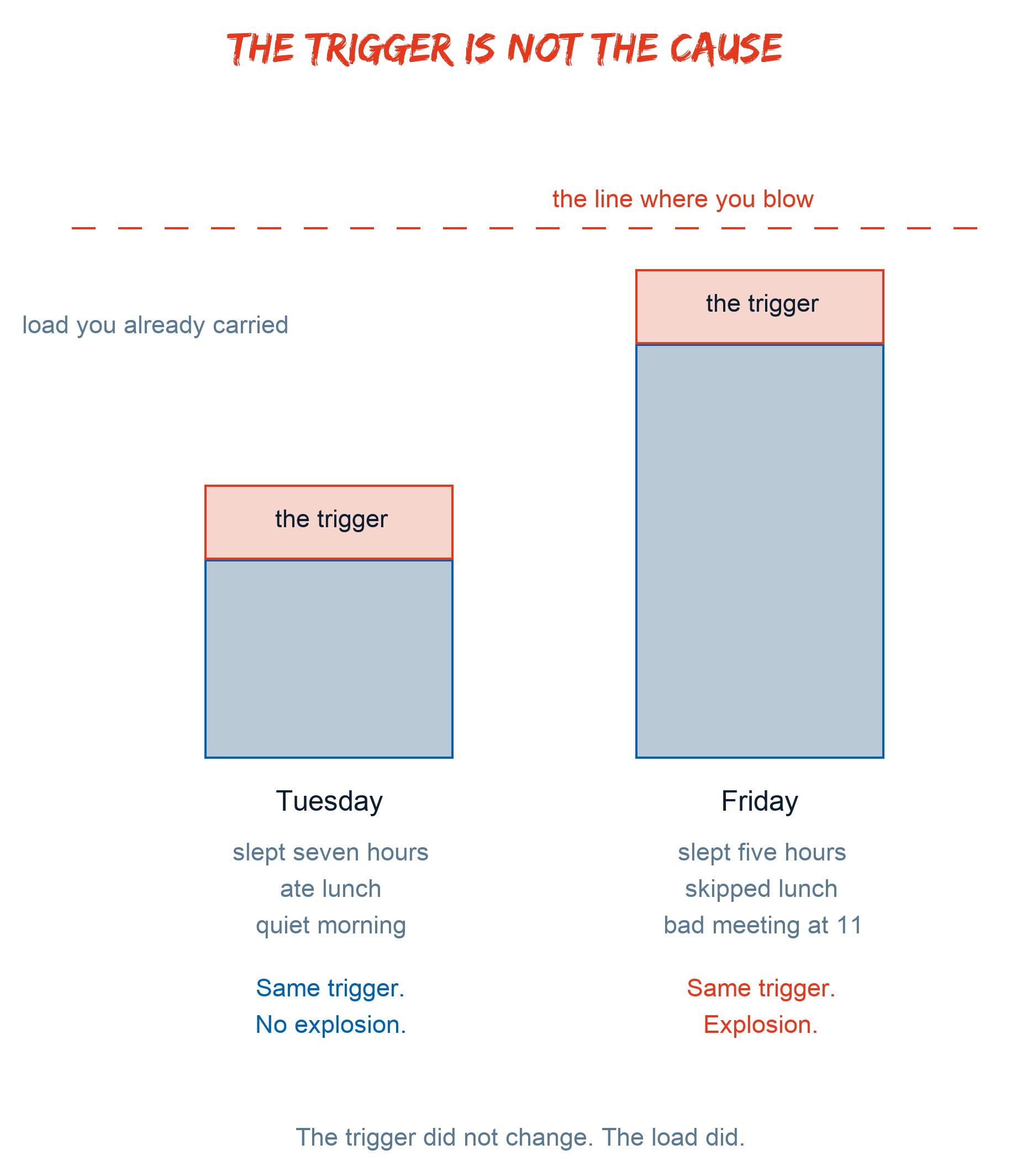
In real life: Lukas walks in after a ten-hour day, no lunch, four hours of sleep. Viktoria asks, "Did you forget the groceries again?" He explodes. On another evening the same question would have earned a shrug. Tonight it landed on a man who was hungry, tired and already stirred up.
🎯 Takeaway: The trigger is the spark; the cause is your load. Manage the load, and many of the same sparks fizzle out.
Try this
Think of the last time you felt angry. Write down the spark in one line. Then run HALT-S on that moment: were you hungry, already angry, lonely, tired or stressed? Mark every one that was lit.
📖 Go deeper: The Anger Signal, Chapter 6