Grounding and Sensory Anchoring

When anger hijacks your mind, your senses can bring you back. Grounding interrupts the rumination loop by redirecting attention to the present.

Anger escalates through rumination: replaying the injustice, imagining comebacks, forecasting catastrophe. Sensory grounding short-circuits this loop by forcing the brain's attention system into the present moment.

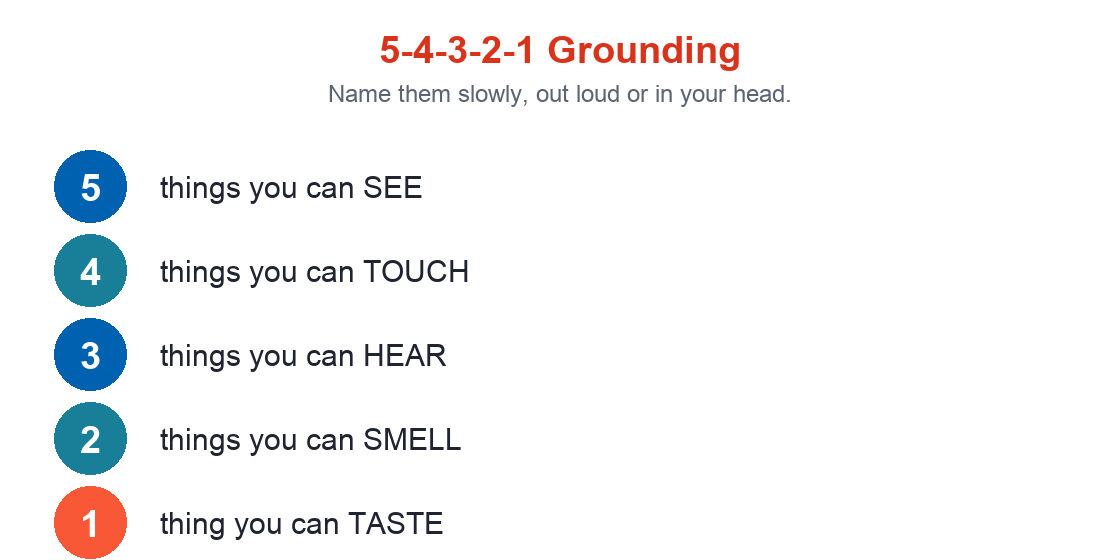
The 5-4-3-2-1 technique: Name 5 things you can see, 4 you can touch, 3 you can hear, 2 you can smell, 1 you can taste. Each sense engages a different neural pathway, and the act of naming activates the prefrontal cortex, the part of the brain anger shuts down.

Cold water exposure: Holding cold water on the face or wrists triggers the dive reflex, which activates the parasympathetic nervous system and slows heart rate within seconds. This is one of the most reliable acute interventions for high-intensity anger.

Temperature anchoring: Holding something cold (ice cube, cold glass) redirects sensation from the internal emotional experience to the body surface. The contrast creates a mental break in the anger state.

Grounding and Sensory Anchoring

In real life: After a blowup at home, Nina goes to the kitchen and holds both hands under cold running water for 30 seconds. The physiological shift is immediate: her breathing slows, her jaw unclenches. She returns to the conversation when she's under her personal threshold.

🎯 Takeaway: Your senses are a direct line to the present, and the present is the only place calm exists.

Try this

Practice the 5-4-3-2-1 technique right now. What do you notice in your body and mind after completing it?

📱 In the app: Tools → Grounding

From the Blog

How to Calm Down Fast (5 Things That Work in Under a Minute)

When you need to calm down right now, you don't have time for theory. Here are five body-based resets that work in under a minute.

Read the article →

Anger and Anxiety: Two Faces of the Same Alarm

Anger and anxiety run on the same alarm system, which is why they trade places so easily. How to tell which one is driving, and why one toolkit calms both.

Read the article →

Anger Management Exercises You Can Do Anywhere

You don't need a private room to cool down. Here are the anger exercises that work at your desk, in the car, around other people, and at home, sorted by where you actually are.

Read the article →

When Anger Is a Trauma Response

Sometimes anger isn't about today. If your reactions feel bigger than the moment, your alarm system may be replaying an old threat. Here's what that looks like and what actually helps.

Read the article →

Misophonia: When Chewing Sounds Fill You With Rage

That flash of rage at chewing or sniffing isn't rudeness or oversensitivity. Misophonia is a recognized condition where specific sounds trigger a real threat response. Here's what's happening, and what helps.

Read the article →

Overstimulated and Angry: When Your Senses Are Full

The TV, the phone, and a talking kid hit at once, and you snap. That's not a character problem, it's a full sensory buffer. Here's the mechanics, the warning signs, and what actually helps.

Read the article →

Why You Shut Down Instead of Blowing Up

Mid-fight, the words stop and your face goes flat. That's not indifference, it's your nervous system pulling the breaker. Here's what's actually happening, and what to do in the twenty minutes after.

Read the article →

How to Stop Angry Tears (Especially at Work)

Your throat tightens, your eyes burn, and crying now feels like losing the argument. Here's how to buy yourself the choice of when the tears come.

Read the article →

Anger Is Contagious: How to Stop Catching It

One tense person can shift a whole room. Here's why anger spreads faster than other moods, and how to stop absorbing someone else's storm.

Read the article →

Why Your Anger Feels Bigger Than Everyone Else's

The same slight that annoys a colleague floods you completely. Here's the honest science of emotional intensity, and why it's not a control problem.

Read the article →

The Window of Tolerance: Why Some Days You Cope and Some Days You Explode

Some days the annoying email is just annoying. Other days it wrecks you. The window of tolerance explains why, and it's not a character flaw.

Read the article →

Meltdown or Anger Outburst? When Overload Looks Like Rage

Shouting, tears, a slammed door. From the outside a meltdown and an anger outburst look the same. They're not, and treating one like the other keeps making things worse.

Read the article →

Anger and Chronic Illness: When Your Body Won't Cooperate

Chronic illness hands you a fresh reason to be angry most days: cancelled plans, stolen energy, people who don't get it. That anger is not a character flaw.

Read the article →

Why a Cancelled Plan Makes You Disproportionately Angry

The text arrives an hour before: something came up, can we move it. You say no problem and then spend the evening furious. The anger isn't about the plan.

Read the article →

Try The Anger App Free

All 32 lessons (interactive, with the Panic Button) inside the app.

Get the free workbook
Grounding and Sensory Anchoring · Anger Course · The Anger App