"I" Statements vs. "You" Statements

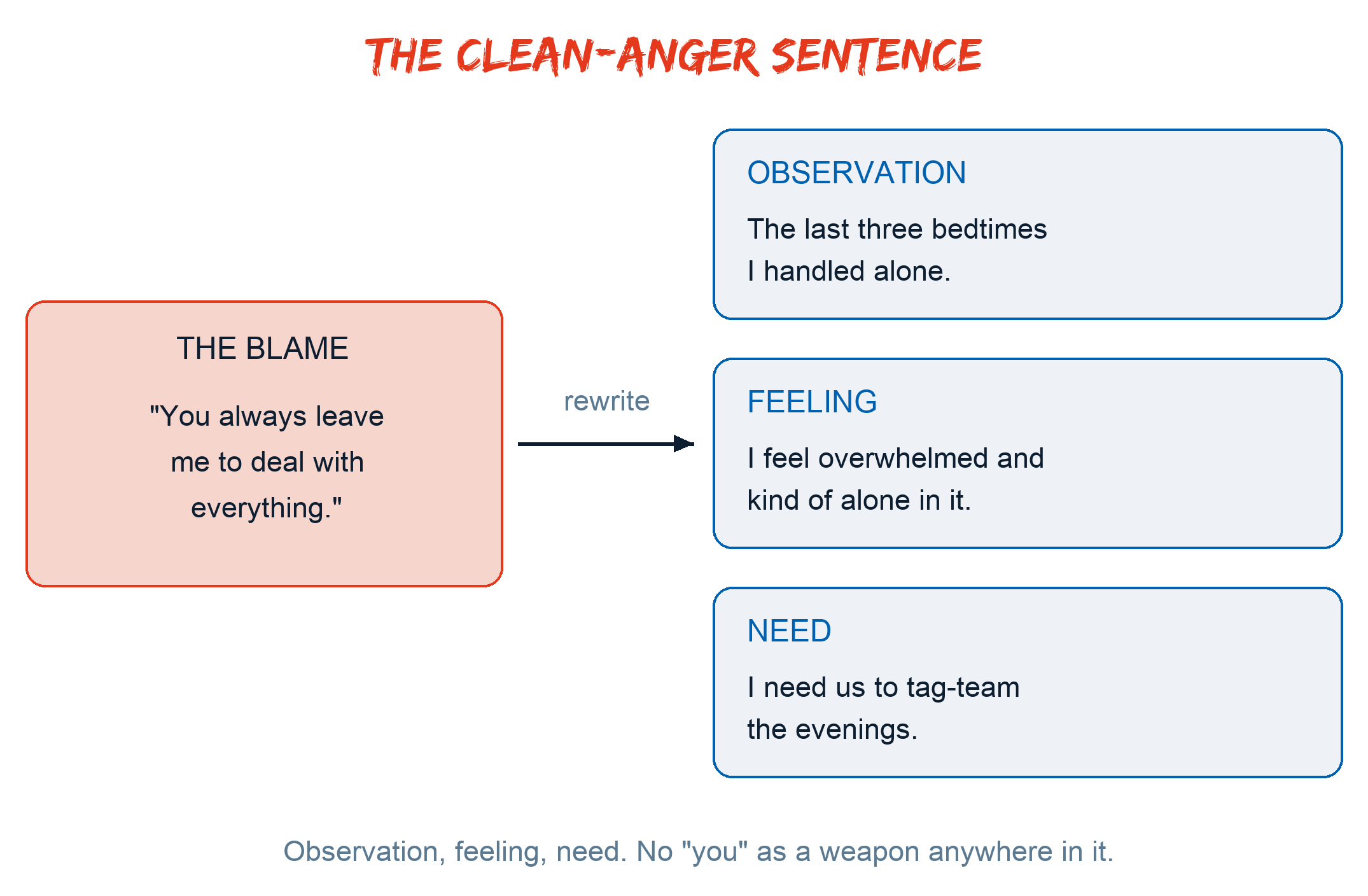
The fastest way to escalate a conflict? Start a sentence with "You always..." The fastest way to de-escalate? Start with "I feel..."

"You" statements blame and accuse: "You never listen to me." They put the other person on the defensive instantly.

"I" statements express your experience without blame: "I feel unheard when I'm interrupted." They communicate the same need but invite dialogue instead of defense.

The formula: "I feel [emotion] when [specific situation] because [need/reason]."

This isn't about being passive. It's about being effective. "I" statements are more likely to get you what you actually need.

In real life: Instead of: "You're so inconsiderate! You left the kitchen a mess again!" Try: "I feel frustrated when I come home to a messy kitchen because I need our shared space to feel manageable after a long day." Same situation. Same need. But the second version opens a conversation instead of starting a fight.

🎯 Takeaway: "I" statements aren't weak. They're strategic. They express your truth in a way the other person can actually hear.

Try this

Rewrite this "You" statement as an "I" statement: "You never help with the kids!"

📱 In the app: Learn → Communication

From the Blog

What to Say When You're Furious (Scripts That Don't Blow Up)

When you're furious, the wrong words make it worse. Here are simple scripts for buying time, naming what you need, and repairing after.

Read the article →

What Is Nonviolent Communication? A Plain-English Guide

Nonviolent Communication (NVC) is a simple way to say hard things without attacking or shutting down. Here's the four-step method, in plain language, with examples you can use today.

Read the article →

How to Set Boundaries Without Exploding (or Caving)

If you only set limits when you've hit your breaking point, they come out as anger. Here's how to set a boundary early, calmly, and make it stick.

Read the article →

How to Stop Yelling at Your Kids (Without Going Silent)

You don't stop yelling by promising to be calmer. You stop by catching the surge earlier. Here's a realistic system for real, tired parents.

Read the article →

How to Respond to Passive-Aggressive Behavior

The silent treatment, the backhanded compliment, the 'I'm fine.' Passive aggression is anger that doesn't feel safe being direct. Here's how to name it without starting a war.

Read the article →

Why Arguments Get Worse Over Text

Text strips out tone, face, and timing all at once. Here's why your brain fills that gap with the worst possible read, and what actually stops the spiral.

Read the article →

Fair Fighting Rules for Couples

Fighting isn't what wrecks a relationship. Fighting dirty is. Researcher John Gottman found four specific habits that predict breakups, and here are seven rules that keep a fight from turning into one of them.

Read the article →

Why Criticism Makes You So Angry

Criticism stings everyone. For some people it detonates. The difference is whether feedback lands as information or as a verdict on your worth.

Read the article →

The Silent Treatment: What It Does and How to Break It

A timeout with a return time calms a fight down. Silence used to punish someone does the opposite. Here's how to tell them apart, and how to break the pattern from either side.

Read the article →

Healthy Ways to Express Anger (That Actually Work)

Not suppressing it, not venting it. Here's what actually works: naming it early, timing it right, and asking for one concrete change.

Read the article →

Dealing With In-Laws Without Losing Your Cool (or Your Marriage)

You didn't choose them and you can't leave them. Here's why in-law conflict is structurally harder than other family friction, and how to hold a boundary without starting a war.

Read the article →

Arguing in Front of Your Kids: Harmful or Healthy?

The honest answer: it depends on how the argument runs, not whether it happens. Here's what the research on kids and conflict actually says.

Read the article →

Angry Neighbors: Ending a Feud You Have to Live Next To

A fight with a friend fades because you get distance from it. A fight with a neighbor lives ten meters from your bedroom. Here's how to end one without moving.

Read the article →

Is Yelling Normal in a Relationship?

Sometimes yelling is a bad night you'll both recover from. Sometimes it's a habit worth fixing. Sometimes it's a warning sign. Here's how to tell which one you're in.

Read the article →

The Anger of Feeling Disrespected

Being talked over, ignored, or dismissed hits a nerve fast. Here's why disrespect triggers anger so quickly, and what actually helps instead of demanding respect in the moment.

Read the article →

Assertive, Not Aggressive: Saying What You Mean Without Blowing Up

Most people swing between swallowing anger and exploding with it. Assertive is the calm third option, and it's a skill you can learn, not a personality trait.

Read the article →

When You're Angry at a Friend

No vows, no shared bank account, so it feels easier to just go quiet. Here's why the silent fade costs more than one honest talk, and how to have it.

Read the article →

How to Respond to an Angry Email Without Making It Worse

A rude email lands and your heart rate spikes. The reply you want to send right now is the one you'll regret. Here's the calmer way to answer it.

Read the article →

How to Complain and Actually Get What You Want

Blowing up at the person in front of you almost never fixes the problem. Here's the calm, specific version of a complaint, and why it wins more often.

Read the article →

The Mental Load: Why You're Furious About the Dishwasher

The rage isn't about the dishes. It's about being the only person who noticed them, remembered them, and had to ask. Here's the work nobody can see, and how to make it visible.

Read the article →

How to Tell Your Partner You Have an Anger Problem

You've decided to work on it. Now you have to say it out loud to the person it has cost the most, without turning the conversation into a plea for reassurance.

Read the article →

Why Someone Being Late Makes You So Angry

Fifteen minutes of waiting and you are further past furious than the situation deserves. Waiting has a specific psychology, and knowing it changes what you do with the anger.

Read the article →

When Doctors Don't Believe You

Being told it's stress when you know something is wrong produces a specific kind of rage. Here's why it cuts so deep, and how to use the anger without it costing you the appointment.

Read the article →

Arguing in a Second Language: Why It's Worse

You lose arguments you would win in your own language, and then you're furious at yourself for hours. There is real research on this, and one finding works in your favour.

Read the article →

Try The Anger App Free

All 32 lessons (interactive, with the Panic Button) inside the app.

Get the free workbook
"I" Statements vs. "You" Statements · Anger Course · The Anger App