The 90-Second Rule

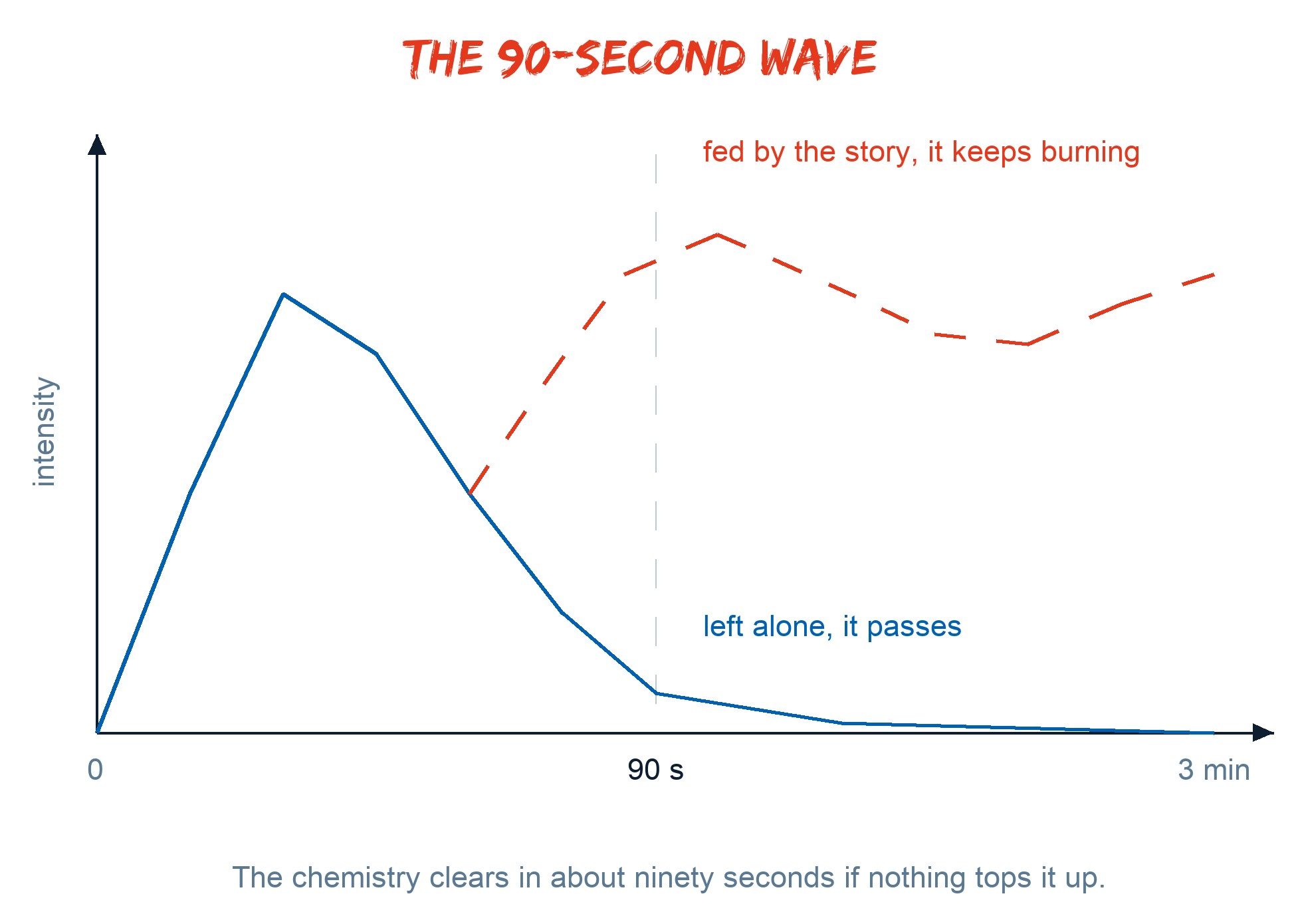
The chemical rush of anger lasts about 90 seconds. Everything after that is a choice.

Neuroscientist Jill Bolte Taylor discovered that the neurochemical process of an emotion, from trigger to full body response, takes approximately 90 seconds. After that, any remaining anger is being re-triggered by your thoughts.

This means: if you can ride out the first 90 seconds without acting, the intensity will naturally drop. The techniques that work in this window are physical, not mental: slow breathing, cold water, muscle tension-release, or simply waiting.

After the 90 seconds, you can choose: do I want to re-engage this anger, or let it pass?

The 90-Second Rule

In real life: Sara receives a harsh text from her ex about custody arrangements. She feels the rage hit: face hot, heart pounding. Instead of texting back immediately, she puts the phone face-down and sets a 2-minute timer. She breathes slowly. When the timer goes off, she rereads the text. It's still unfair, but the urge to fire back with something she'd regret has passed. She drafts a measured response.

🎯 Takeaway: You don't need to suppress anger. You just need to outlast the first 90 seconds. Delay is your most powerful regulation tool.

Try this

You receive an infuriating email at work. What's the best first response?

📱 In the app: Tools → Breathing

From the Blog

Anger Management: The Complete Science-Backed Guide (2026)

Everything that actually works for anger management in one guide: the neuroscience, the evidence-based methods, step-by-step techniques, and when to get help.

Read the article →

Angry at My Child and Feel Guilty? Read This First

Snapping at your kid and drowning in guilt doesn't make you a bad parent. Here's what's happening, and how to break the snap-and-guilt cycle.

Read the article →

How to Calm Down Fast (5 Things That Work in Under a Minute)

When you need to calm down right now, you don't have time for theory. Here are five body-based resets that work in under a minute.

Read the article →

How to Stop Anger in the Moment (When Willpower Fails)

Stopping anger mid-moment isn't about willpower. It's about having a system ready before your thinking brain goes offline. Here's what actually works.

Read the article →

Why Your Calming Strategies Keep Backfiring

You did the deep breathing and felt worse. You 'just communicated' and it blew up. The standard advice fails for real reasons. Here's what works.

Read the article →

Why Counting to 10 Doesn't Work (and What Does)

Counting to ten assumes the calm part of your brain is still online. It isn't. Here's why the classic advice fails, and what reaches you when logic can't.

Read the article →

Why Do I Get Angry So Fast? (It Happens Before You Think)

If your anger feels instant, that's because it is. Here's the biology behind the sudden flash, and why it's a sign your system is working, not broken.

Read the article →

Why You Regret the Things You Say in Anger

The cruel thing you said wasn't the real you. During peak anger, the part of your brain that reasons goes offline. Here's the biology, and the repair.

Read the article →

Why Driving Makes Me So Angry (and How to Stop)

You're a calm person until you're behind the wheel. Road rage isn't a character flaw. Driving stacks every anger trigger at once. Here's why, and what actually works.

Read the article →

The 90-Second Rule: Why Anger Only Lasts 90 Seconds

The chemical surge of anger clears your body in about 90 seconds. Everything after that, you're refuelling with your own thoughts. Here's how to use that fact.

Read the article →

How to Control Anger: A Stage-by-Stage Guide

Anger control isn't one skill, it's three, and each one only works at a certain level of heat. Learn to rate your anger from 1 to 10 and pick the tool that fits the stage.

Read the article →

How to Stop Yelling at Your Kids (Without Going Silent)

You don't stop yelling by promising to be calmer. You stop by catching the surge earlier. Here's a realistic system for real, tired parents.

Read the article →

Anger After a Breakup: Why It Hits So Hard

The rage that shows up after a breakup isn't a character flaw. It's grief wearing armor, and it follows a pattern you can actually work with.

Read the article →

The Amygdala Hijack: Why Anger Takes Over Your Brain

You said the thing you knew you'd regret before you'd even decided to say it. That's not a character flaw. That's your amygdala firing before your thinking brain gets a vote.

Read the article →

Try AngerApp Free

All 32 lessons (interactive, with the Panic Button) inside the app.

Join Beta Access
The 90-Second Rule · Anger Course · AngerApp