
NVC in Conflict
Splitting the difference feels fair, and it can leave a deal that meets nobody's actual need. NVC goes looking for a solution that meets both.
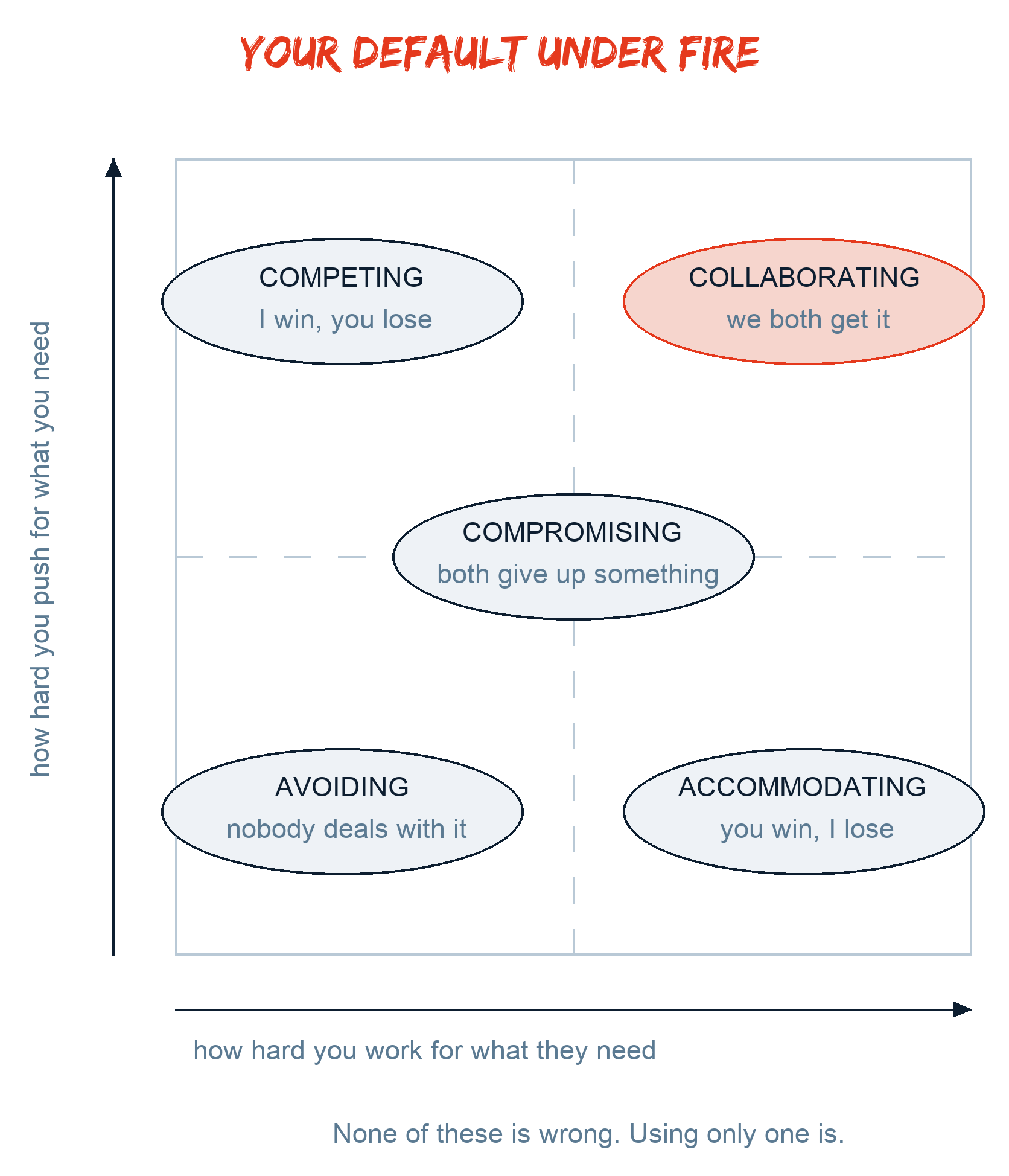
Under pressure most people fall back on one of five conflict styles, mapped by Kenneth Thomas and Ralph Kilmann: competing, avoiding, accommodating, compromising and collaborating. Each one fits some situations, and the trouble starts when one runs on autopilot.
Compromising trades positions without ever finding the needs underneath. Collaborating digs for the needs on both sides and builds something that meets them. It takes time, calm and skill, which is why it belongs in a conversation you scheduled.
NVC in a conflict runs in this order:\
- Self-empathy: know your own feeling and need before you start.\
- Empathy for them: reflect their feeling and need until they confirm you understood.\
- Your side: observation, feeling, need, request.\
- Options: look for strategies that meet both needs, and list them without judging.\
- Check: does this meet your need, and mine? If not, go back to the options.
Know your default as well: a competer pursues and an avoider withdraws, and each move triggers more of the other. Andrew Christensen and Christopher Heavey found that this loop depends partly on whose issue is on the table. On your own issue, you are the one more likely to pursue.
These steps assume a reasonable person on the other side. If someone turns every move into ammunition, you need the conflict triage in Part V.
In real life: Lukas wants to settle the holiday plan tonight, and Viktoria wants it to wait until Saturday, which is their old loop of pursue and withdraw. This time Lukas names his move: "I know pushing now makes you shut down. Can we do it Saturday at nine?" Viktoria answers with hers: "Yes. I promise I'm not dodging it." On Saturday each of them names a need. His is to know the plan is settled. Hers is to have a say without being rushed. They pick the dates together and put them in the calendar that morning.
🎯 Takeaway: Look for what both people need and build from there. Know your default style, and change one move to break the loop.
Try this
Think of a current conflict and write your need and your best guess at theirs. List three options that might meet both, without judging any of them yet. Then name the conflict style you usually fall into, and the one move you will change next time.
📖 Go deeper: The Anger Signal, Chapters 15 and 16
Part V